Touring production · Corporate & military
Close-harmony music of the 1940s, 50s and early 60s — in the tradition of the Andrews Sisters.
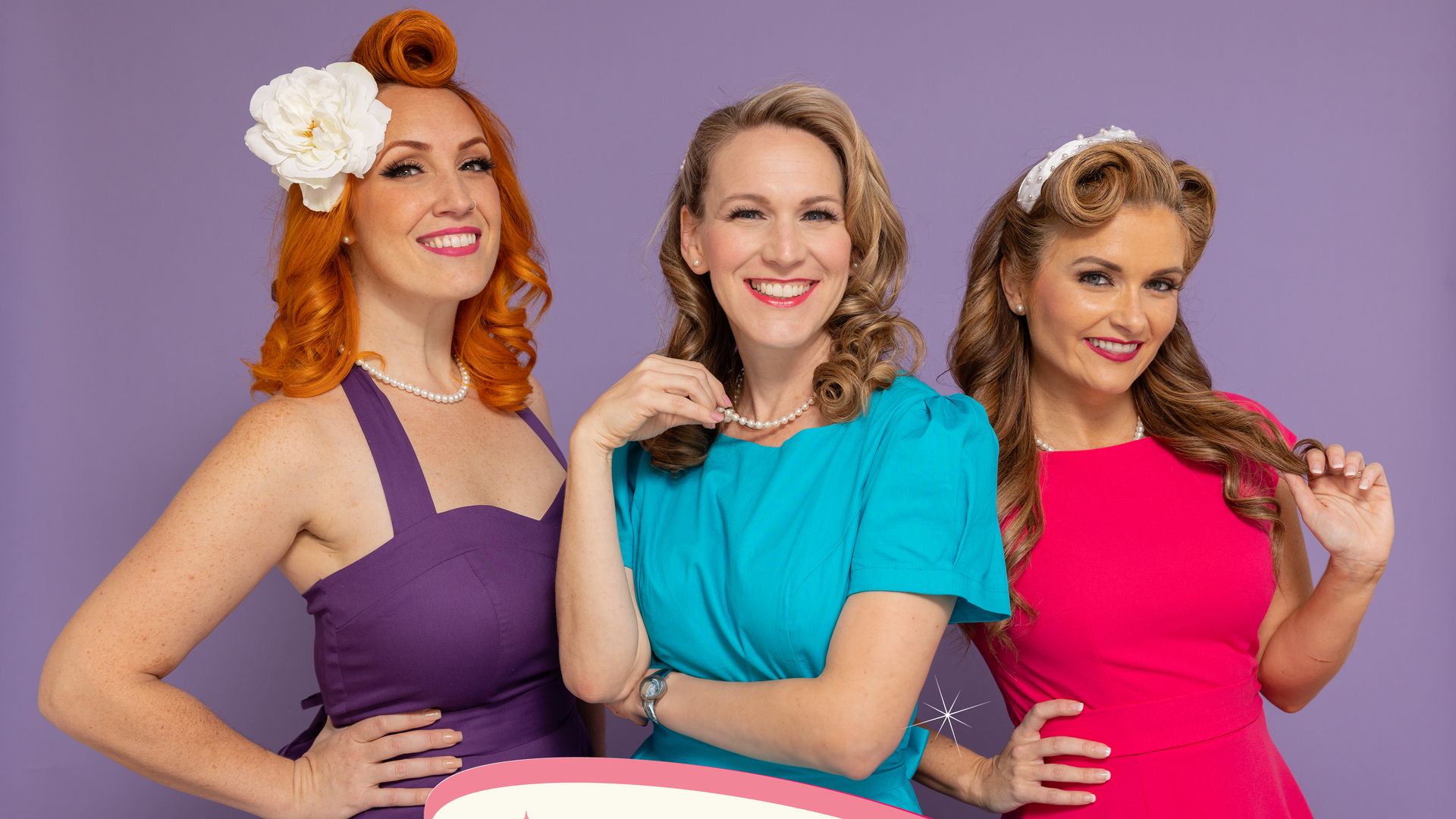
The Hello Dollys are Alyssa, Tara and Amelia, and they sing close harmony the way it was actually recorded: three parts, tight, no safety net. It is the least forgiving music in the American songbook. Close harmony lives entirely on blend and intonation — three voices moving inside a few semitones of one another, where a single singer a hair sharp turns the whole chord to mud. There is no lead vocal to carry the room and nowhere to hide. Done well, it is the sound people associate with the best years of American popular song. Done badly, it is unlistenable. The Dollys’ arrangements are the reason clients book them a second time.
The show opens in the 1940s. This is the Andrews Sisters tradition — wartime swing, boogie-woogie, and the barrelhouse close-harmony numbers that came out of the radio to families waiting on news from overseas, alongside the ballads that got sung at every send-off and every homecoming. It is music with a specific emotional weight, and for any audience with a connection to that generation, it lands hard.
Then the decade turns. The set moves into the 1950s and early 60s, and the whole feel changes with it: the girl groups, the beehive-and-heartbreak records, the three-part pop that ruled the radio between doo-wop and the British Invasion. Same discipline, entirely different swing. It is two decades of American women’s music delivered in a single evening, and it does what a tribute show is supposed to do — it moves an audience through time instead of just playing them old records.
The staging carries the arc. Poodle skirts and period wardrobe, choreography built for the material, and costume changes that mark each turn of the decade so the audience watches the era shift as well as hears it. None of it is a costume party. The clothes are there because the music has a period, and the show commits to it.
The patriotic tribute. Because the wartime repertoire is already at the center of this act, a patriotic set is an extension of the show rather than a bolt-on. The Dollys program one for the nights that call for it — Memorial Day and Veterans Day events, military ceremonies and unit reunions, Fourth of July programs, and corporate evenings honoring service members — closing on “God Bless the U.S.A.” in full three-part harmony.
The holiday show. December is the same trio in the same wardrobe with a different book, and the fit is close to exact: the Christmas canon was written and recorded in precisely the years this act already lives in. “White Christmas” and “I’ll Be Home for Christmas” are wartime songs before they are holiday songs, which means the emotional weight the Dollys bring to the 1940s material is already the right weight for them. From there the set runs forward through Judy Garland and Eartha Kitt to Brenda Lee and the Ronettes. It works for a corporate holiday party, a tree lighting, a gala or a private December event, in either the trio or full-band configuration.
Two ways to book it. As a full production with band, it is a concert: the Dollys out front with live players behind them, scaled to a theater stage or a ballroom, with the full visual production intact. As a vocal trio with backing tracks, it becomes the most placeable act in the series — three singers, a footprint that fits almost anywhere, and a finished sound. It fits a cocktail hour, a welcome reception, a ceremony, or a stage that was never built to hold a band. When a room cannot take a nine-piece, this is the show that still fills it.
That flexibility is why the Dollys work rooms most acts cannot. They have played intimate spaces and stages in front of thousands, and they are as comfortable at a military ceremony as they are opening a stockholders’ conference — two audiences with almost nothing in common except that both expect to be taken seriously.
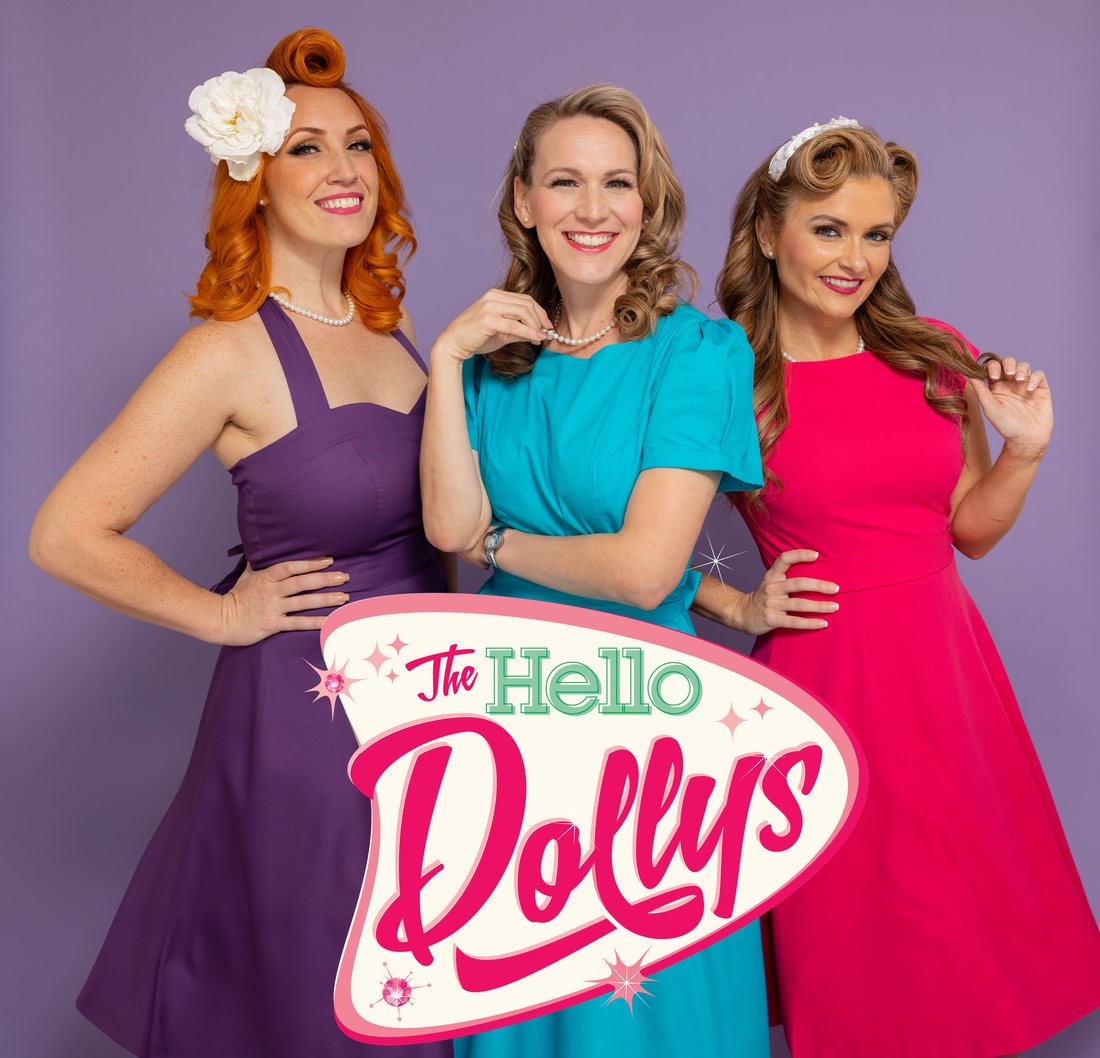
The most versatile act in the series and the easiest one to put in a corporate room. Available as a strolling trio, a featured set, or a full production with band.
Their arrangements and professionalism set them apart from all of the other groups in this genre.
Betsy Cannoway, Xylem / All Pro Productions, Nashville
The songbook
The Dollys program to the occasion rather than playing one fixed list. These are the three sets clients ask for most — run one, or run all three across an evening with a costume change between each.
More from the series
Book it
We’ll come back with availability, what each show needs, and one price — usually the same day. If you have more than one night to fill, say so and we’ll program the whole arc rather than quoting you a band.